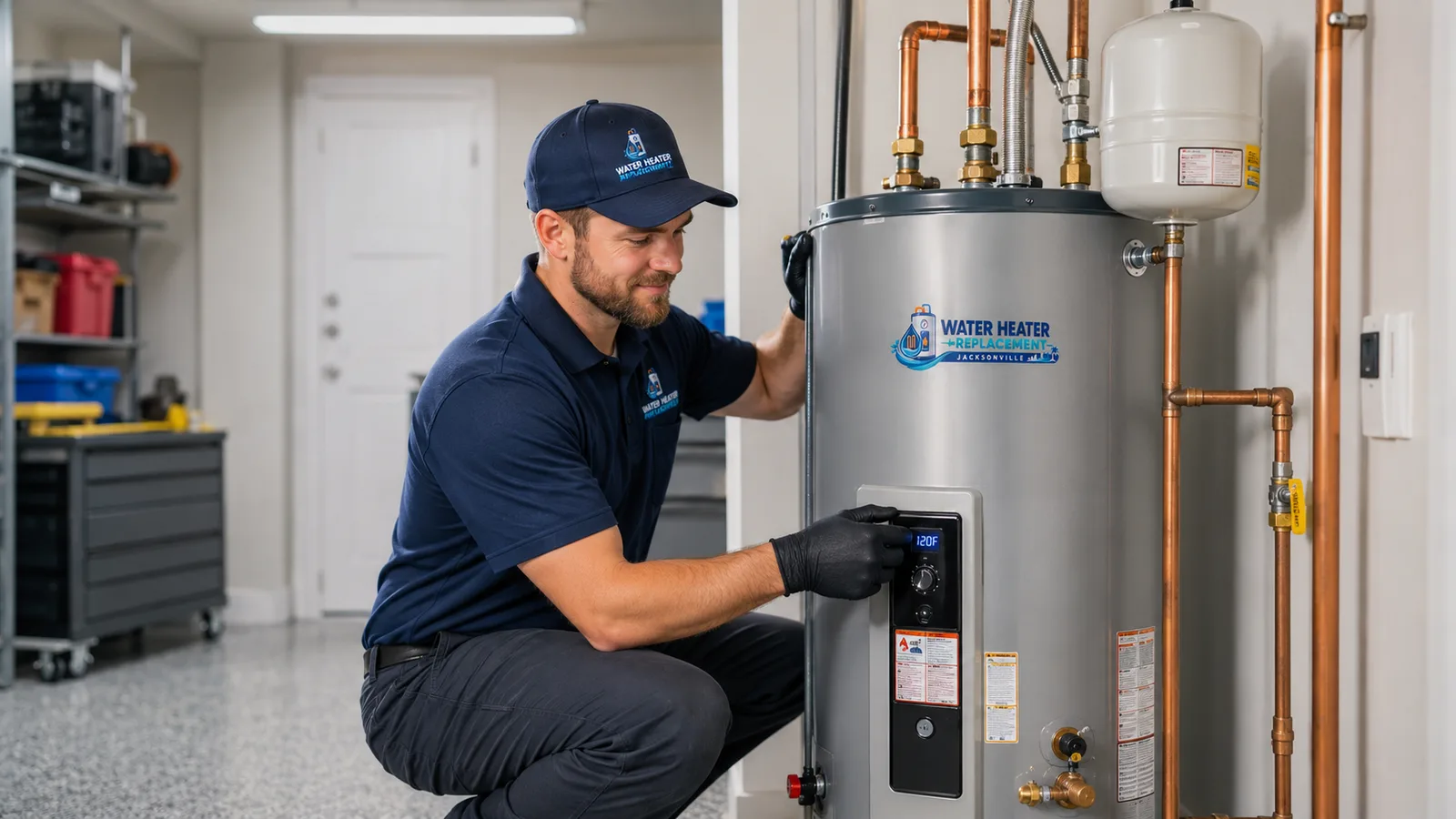
Why electric tanks are common here
Electric water heaters are the default configuration in a large share of Jacksonville homes, particularly in areas where natural gas service was never extended to the property or where the original builder simply standardized on electric. That prevalence means electric replacement is one of the most frequently requested services on this site, and it is worth its own page because electric systems have a distinct set of failure points and inspection steps compared with gas units, covered separately on the gas replacement page.
How electric tanks fail
Electric tanks typically use two heating elements, an upper and a lower, each paired with its own thermostat. A single failed element usually shows up as reduced hot water volume rather than a complete loss, since the remaining element continues to work. A tripped high-limit switch, often caused by a failing thermostat, can shut the whole system down even though the tank itself is otherwise fine. These are the failure modes that make sense to repair on a younger tank. What does not make sense to keep repairing is a tank that is failing elements repeatedly, showing rust in the water, or making noise from accumulated sediment, because those symptoms point to the tank shell aging out rather than a component fault.
How the replacement is sequenced
After confirming capacity, voltage, and element wattage on the existing unit, power is shut off at the breaker and the tank is drained. Because electric elements sit inside the tank wall, both the upper and lower connections are inspected during removal, along with the wiring whip and disconnect box above the unit. The old tank is removed, the new one is set and leveled, and water connections, a relief valve discharge line, and a drain pan where required are completed. The electrical whip is reconnected, breaker capacity is confirmed against the new unit's rated draw, and the system is filled, purged of air, and energized. Elements are checked for correct operation in sequence, and recovery is verified at a fixture before the job is considered complete.
Jacksonville-specific conditions that affect this project
Local water carries enough sediment that lower elements in particular accumulate scale over time, which insulates the element and forces it to run longer to reach set temperature. That extra runtime is part of what shortens element life in this region compared with areas with softer water. Humidity in garages and closets, where a large share of Jacksonville's electric tanks live, also affects the wiring whip and disconnect box over the years, and it is common to find connector corrosion that needs addressing during a replacement even though the original complaint was simply "not enough hot water."
Southside neighborhoods show a mix of installation contexts for electric tanks: garage placements in Baymeadows and Deerwood with generally good access, and older interior closet placements in parts of San Marco and Lakewood where clearance is tighter and a drain pan retrofit is more likely to be needed if one was never installed originally.
What changes scope or cost
A same-voltage, same-capacity swap with a functioning breaker and wiring whip is the simplest case. Cost rises when the breaker or wire gauge does not match the new unit's draw and needs electrical work, when the disconnect box has to be replaced due to corrosion, when a pan needs to be added where none existed, or when capacity is being increased and physical dimensions no longer fit the existing space. See the cost calculator for how these factors translate into a planning range.
How to prepare
Locate the breaker that feeds the water heater and confirm it is labeled correctly, clear the space around the unit, and note any burning smell, tripped breaker, or visible corrosion at the top of the tank so it can be checked first. If household demand has grown since the current tank was installed, review the sizing guide, since electric tanks recover more slowly than gas units and correct capacity matters more for larger households.