What counts as an urgent water heater situation
Not every water heater problem needs immediate attention, and treating everything as an emergency leads to rushed decisions on equipment that will sit in your home for the next decade. The dividing line is usually water: a unit that is actively releasing water, or that has already released enough to reach flooring, drywall or stored belongings, needs to be isolated and dealt with promptly. A unit that has simply stopped producing hot water is inconvenient but stable, and there is room to diagnose properly before deciding.
A leaking tank
Where the water originates tells you almost everything. Drips at a threaded fitting, at the drain valve, or from the temperature and pressure relief discharge line are component issues and may be repairable. Water seeping from the seam or the bottom of the tank body itself means the glass-lined steel shell has corroded through from the inside, and there is no repair for that condition — the unit is finished and will get worse, sometimes suddenly. Relief-valve discharge that recurs is its own signal, pointing to excessive pressure or thermal expansion that needs to be addressed rather than ignored.
Water around the base of the heater
Standing water in the pan or on the slab around a unit deserves attention even if the source is not obvious. Condensation can account for a small amount in a humid Jacksonville garage during summer, but a persistent puddle rarely has an innocent explanation. Check the pan drain line if one exists — a blocked overflow route turns a contained slow leak into an uncontained one. In second-floor or attic installations, inspect the ceiling directly below for staining, which often appears before anyone notices water at the unit itself.
No hot water
A complete loss of hot water splits by fuel type. On electric units the usual suspects are a tripped breaker, a failed heating element or a failed thermostat, all of which are repairable on a tank that is otherwise sound. On gas units a failed burner assembly, thermocouple or control valve produces the same symptom. If the unit is relatively young and dry, this is a diagnosis question, and the repair or replace guide covers how age and repair history factor into it. If the unit is past ten years old and this is not the first failure, replacement is usually the more economical answer.
Visible corrosion
Rust at the bottom rim, flaking metal around fittings, or brown staining that returns after cleaning indicates the unit's protective systems have been exhausted for some time. Corrosion is progressive and does not reverse. It is not an emergency on the day you notice it, but it is a strong signal to plan a replacement on your schedule rather than wait for the failure to pick the timing. This is especially common on units near the coast around Jacksonville Beach and on older equipment in humid garage and closet installations across the metro.
Rusty or discolored hot water
Brown or rust-tinted water that appears only on the hot side generally comes from inside the tank rather than the supply. Combined with age, it usually means the anode rod has been depleted long enough for the tank lining to begin failing. That is a replacement conversation, though not typically an urgent one unless it is accompanied by leaking.
What happens during an urgent replacement
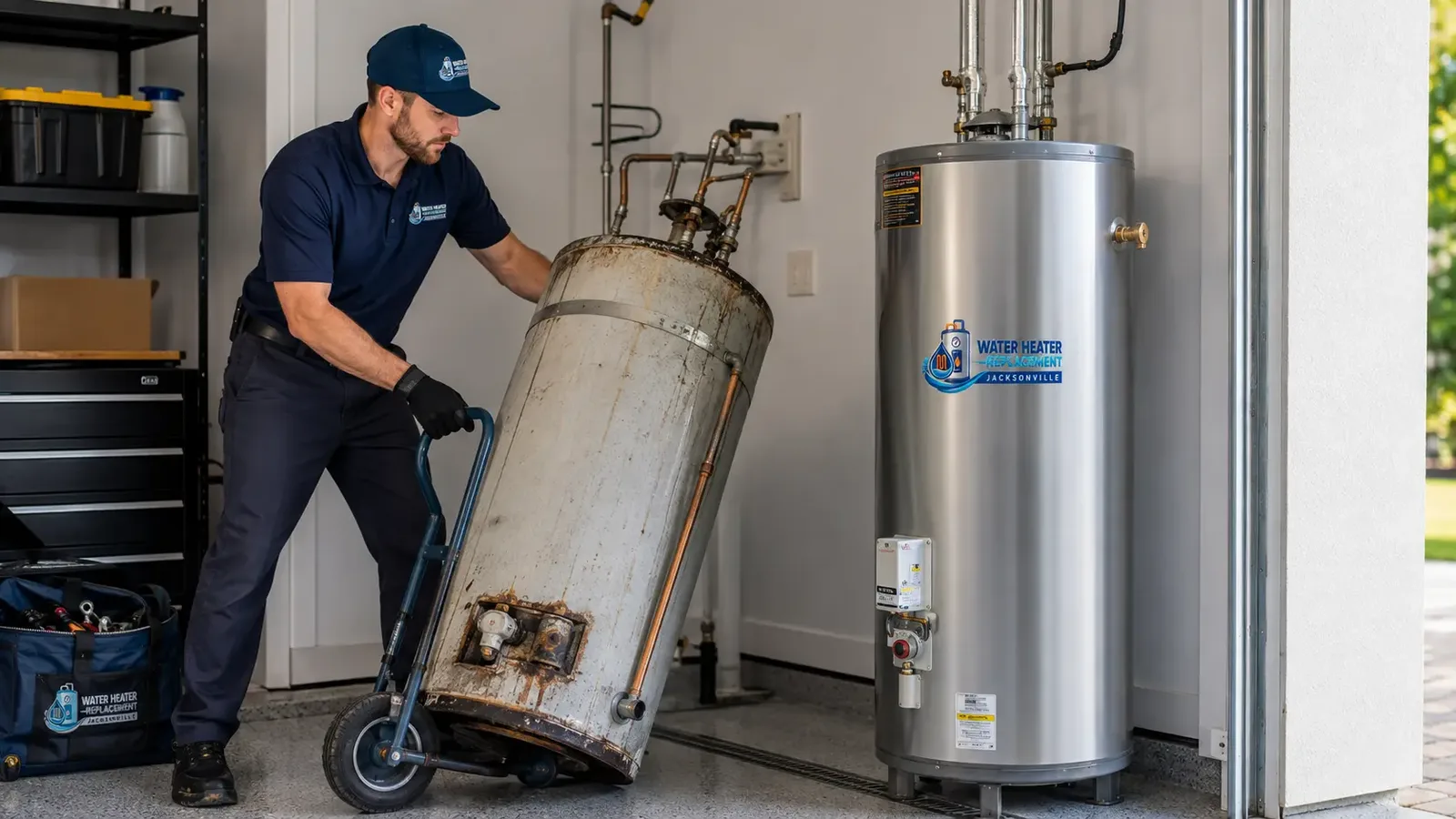
An urgent replacement follows the same technical sequence as a planned one, compressed into a single visit and with less time to deliberate over equipment. The failed unit is isolated if you have not already done so, drained — which is the slow part, particularly on a sediment-heavy tank — disconnected from water, fuel and venting, and carried out of the space. The location is checked before the new unit goes in: pan condition, shutoff valve condition, relief discharge routing, and whether corrosion has affected the supply connections, since all of those are common on the same units that fail.
The replacement is set, leveled, connected with new fittings where old ones are worn, filled slowly so air purges from the lines, and brought up to temperature. Every disturbed joint is checked, the relief valve and its discharge path verified, and the thermostat set to a safe operating temperature before the visit ends. Where the failure caused water damage, drying and restoration are separate from the plumbing work and handled by whoever your insurance directs you to.
Because urgent replacements compress the decision window, it is worth knowing your options in advance rather than choosing under pressure. If your unit is approaching ten years, spend a few minutes with the sizing guide and the cost planner now, so that if the day comes, the only remaining question is scheduling.
What we do not promise
This page deliberately avoids claims of 24/7 availability, guaranteed same-day arrival or fixed response times, because those are commitments we are not in a position to hold to for every call. Urgent situations are prioritized when scheduling, and you will be told a realistic window when you call rather than an aspirational one.