What a water heater installation involves
Installation is the broader of the two projects this site covers. Where a tank replacement assumes an existing unit is coming out and a comparable one is going back into the same spot, an installation covers everything that does not fit that description: a new build or addition with no heater in place yet, a unit moving from an interior closet to the garage, a switch from electric to gas, or a household stepping away from storage entirely and moving to on-demand. The difference matters because reused connections are what keep a replacement short and predictable. Once those connections have to be created or rerouted, the project needs planning before equipment is ordered.
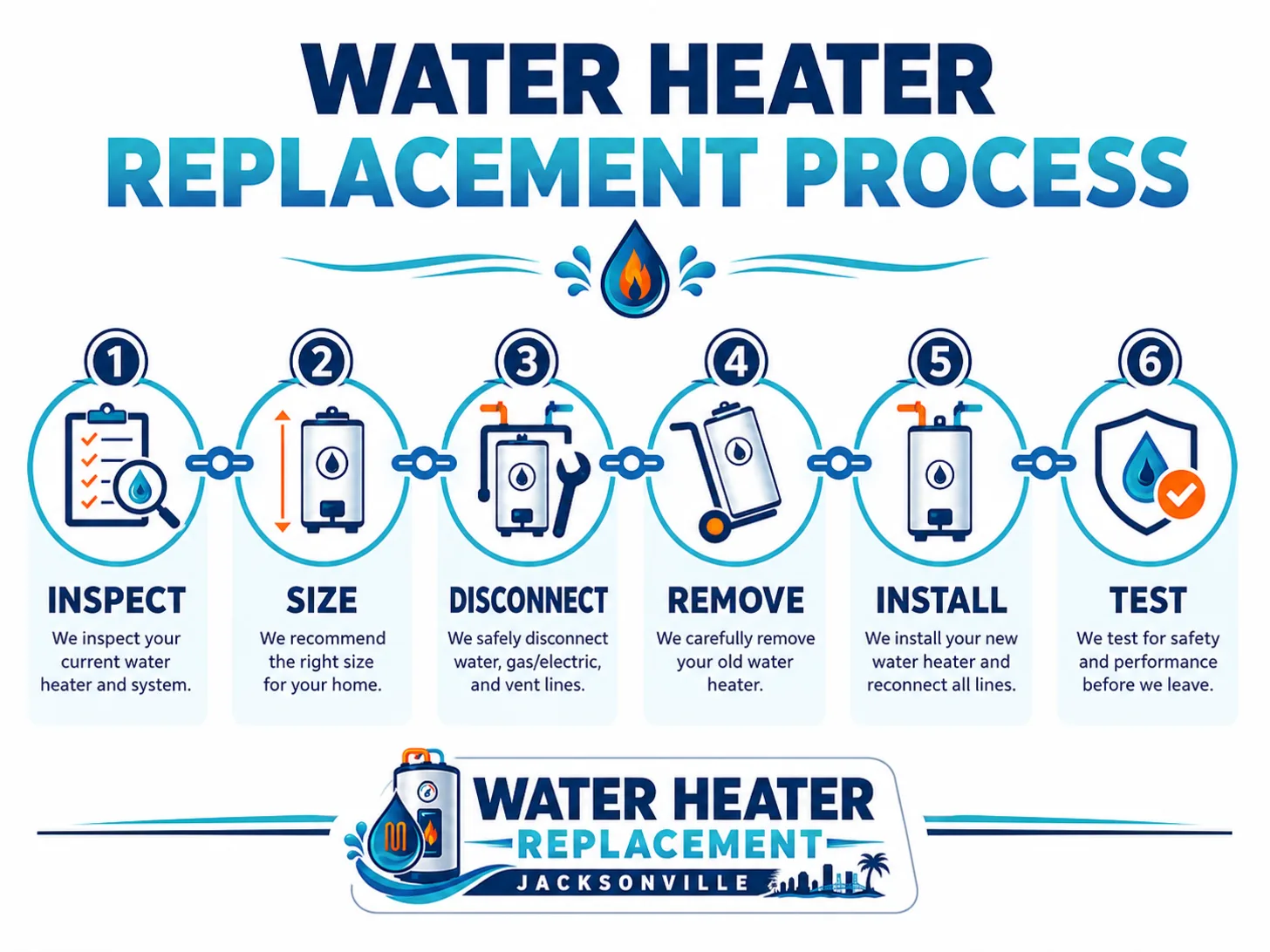
Every installation starts the same way regardless of the equipment: confirming what the location can support. That means checking the water supply routing, where a temperature and pressure relief discharge line can legally terminate, whether the floor position needs a drain pan and where an overflow would drain to, and how the unit will be powered — either a correctly sized electrical circuit or a gas supply with enough capacity and a venting path that meets clearance requirements. Skipping that step is how installations end up half-finished on the day of the work.
Replacement or new installation — which one applies
Most Jacksonville homeowners contacting us about installation actually need a replacement, and that is usually the cheaper and faster outcome, so it is worth being clear about which project you have. If the old unit is in a spot that still works for the household, the fuel is staying the same, and the capacity is close to what was there, the replacement pages cover it in more detail. If anything about the location, fuel or system style is changing, this page is the right starting point.
Tank water heaters
A storage tank remains the default for most Jacksonville homes because it is the lowest-cost equipment to install, tolerates a wide range of installation locations, and handles bursts of demand well as long as the capacity matches the household. Typical installations run from a 30 to 40 gallon unit for one or two people, 40 to 50 gallons for a family of three or four, and 50 to 75 gallons or more where several bathrooms are in use at once. Because the tank keeps water hot around the clock, placement matters less for performance than it does for serviceability and leak containment — a tank in a garage on a pan is far more forgiving than one tucked into a second-floor closet.
Tankless systems
Tankless installation is where the planning load concentrates. An on-demand unit sizes to peak simultaneous flow rather than storage volume, so the question is not how many gallons the household uses in a day but how many fixtures might run at once and how much the incoming water has to be raised in temperature to reach the setpoint. Northeast Florida helps here: incoming groundwater is warmer than in most of the country, which means a given unit delivers more usable flow than the same unit would further north. Gas tankless installation usually needs a larger gas supply line and dedicated venting, while electric tankless needs substantial panel capacity that many older Jacksonville homes simply do not have. The tankless installation page goes into the conversion in detail.
Electric systems
Electric units are common across Jacksonville, especially in homes built without a gas service. Installation centers on the circuit: correct breaker sizing, correct wire gauge for the run length, and a disconnect where required. A new electric installation in a location that has never had one means running a dedicated circuit from the panel, which is straightforward in an unfinished garage and more involved when the path crosses finished walls. See electric water heater replacement for the fuel-specific detail.
Gas systems
Gas installation adds combustion air and venting to the checklist. The vent has to be correctly sized and pitched with proper clearance from combustible material, the gas line has to supply enough volume for the appliance's input rating with everything else in the house running, and the installation space needs adequate air for combustion. Converting a location from electric to gas is a real project rather than a swap, and the gas replacement page covers what gas-fired equipment needs on an ongoing basis.
Sizing the equipment before installation day
Getting sizing right at installation is more important than at replacement, because a new installation often means the household has no baseline to compare against. For storage tanks, first-hour rating is the number that matters more than raw gallons: it reflects how much hot water the unit can actually deliver during a peak hour including what it reheats along the way. For tankless, the equivalent number is gallons per minute at a realistic temperature rise. Work through the sizing guide before committing to equipment, and use the cost planner to build a planning range once the equipment direction is settled.
Site conditions that shape a Jacksonville installation
Local housing stock creates recurring patterns. Slab-on-grade homes across Southside and Arlington put the unit in a garage or a ground-floor closet, which keeps access easy but exposes fittings to humidity year-round. Older homes in Riverside and San Marco frequently have tight interior closets sized for equipment dimensions that are no longer standard, so a modern unit of the same nominal capacity may not physically fit without a location change. Coastal properties near Jacksonville Beach deal with salt-laden air that shortens the life of exposed metal connections. Attic and second-floor installations anywhere in the metro need a pan with a routed overflow, because a slow leak above a finished ceiling causes more damage than the equipment itself is worth.
Removal of existing equipment
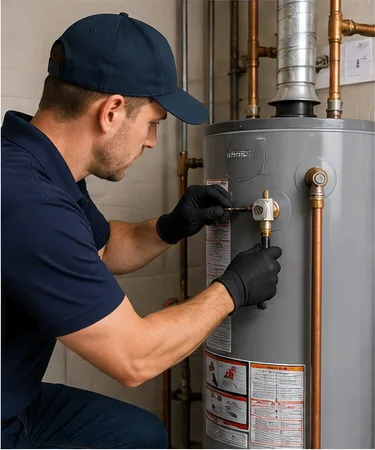
When an old unit is part of the project, removal happens first: supply shut off, tank drained — slower than expected on a sediment-heavy unit — fuel and water connections disconnected, and the unit carried out and hauled away. That sequencing matters on relocations, because the new position often has to be prepared while the old unit is still in place, and the household is without hot water for the window in between.
Commissioning and handover
Once connected, the system is filled slowly so air purges from the lines, energized, and checked at the fixtures for temperature and flow. Every joint disturbed during the work is checked for leaks, the relief valve and discharge routing are verified, and the thermostat is set to a safe operating temperature. You should finish the visit knowing where the shutoffs are, which breaker or gas valve controls the unit, and what routine maintenance the specific equipment expects.