What tank replacement covers
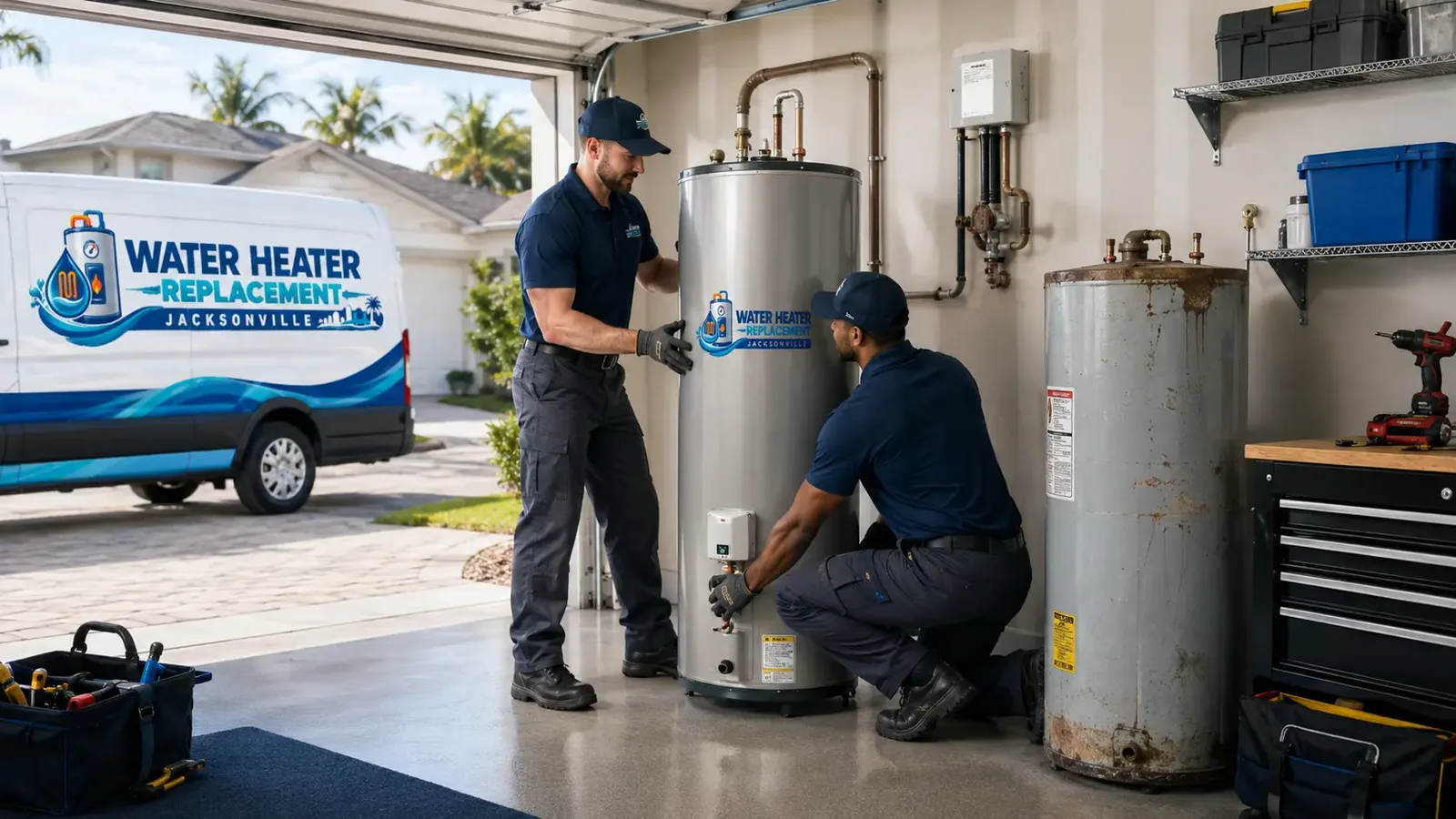
Tank replacement is the most common of the six services on this site because it matches the most common situation: a storage tank that has been in service for eight to twelve years, is showing signs of age such as rumbling, discoloration, or slower recovery, and needs to be swapped for a new unit of roughly the same type. The fuel stays the same, the capacity stays close to what was there before, and in most cases the unit goes back in the same closet, garage corner, or utility room it came out of. That continuity is what keeps the project predictable, because the electrical circuit or gas line, the water connections, and the venting, when applicable, are already sized and routed for a tank in that spot.
This is different from a full new installation, which is covered on the water heater installation page, and it is different from switching to an on-demand system, which is covered on the tankless installation page. If your project involves either of those changes, those pages walk through the additional planning involved. This page assumes the goal is simply putting a comparable tank back where the old one was.
When tank replacement is the right fit
It fits households that are satisfied with how their current system performs and want to avoid disruption: no new gas line, no new circuit, no relocation. It also fits anyone replacing on a planned schedule rather than reacting to a failure, since a known tank going out for a known tank coming in is the lowest-friction path to restored service. It is a reasonable choice even for a household considering tankless down the road, since a tank replacement now does not preclude a conversion at the next replacement cycle.
How the work is sequenced
The visit starts with confirming what is currently installed: capacity, fuel type, age, connection condition, and whether a drain pan and expansion tank are already present and in acceptable shape. The water supply is shut off and the tank is drained, which takes longer than people expect on a unit that has accumulated years of sediment because the sediment itself slows the drain rate. Once empty, the unit is disconnected from its water lines, its electrical circuit or gas and vent connections, and removed from the space.
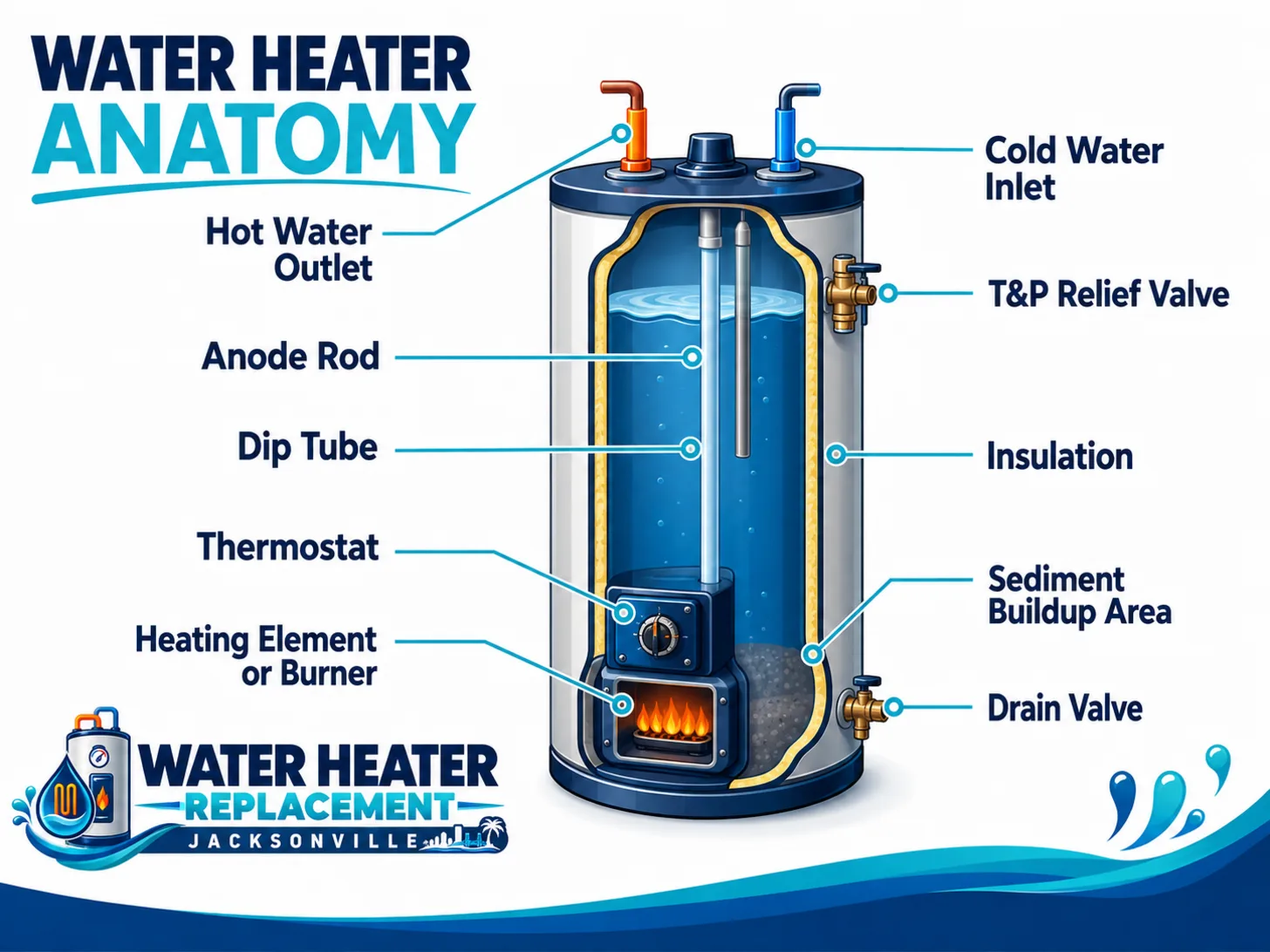
The new tank is set in place, leveled, and connected: water lines with new fittings where the old ones are worn, a new temperature and pressure relief discharge line routed to code, a drain pan installed or replaced if the location requires one, and fuel connections completed with new flexible connectors or hard piping as appropriate. For gas units, venting is inspected and reconnected or corrected if it does not meet current clearances. The tank is then filled slowly to allow air to purge from the lines, energized, and checked at the nearest fixtures for temperature rise, adequate flow, and the absence of leaks at every joint that was disturbed during the swap.
Jacksonville-specific conditions that affect this project
Northeast Florida's water carries enough mineral content that sediment settles at the bottom of a tank steadily over its life, and that sediment is exactly why draining an old unit takes real time and why a rumbling or popping sound is often the first audible warning of a tank nearing replacement. Humidity in garages and interior closets also accelerates corrosion at fittings and connectors, so it is common to find a shutoff valve or flex connector that needs to be replaced even when the tank itself is the only part scheduled for the swap.
Housing stock across Southside neighborhoods varies enough that installation locations differ block to block: older homes near San Marco and Lakewood often have tanks in interior closets with limited clearance, while newer construction in Baymeadows, Southpoint, and Deerwood more commonly places tanks in garages with easier access. Attic installations, less common but present in some homes, add handling time because equipment has to be carried up a pull-down stair or scuttle, and a secondary drain pan with a properly routed overflow line is essential given what a leak in an attic can do to the ceiling below.
What changes scope or cost
A same-capacity swap with connections in good condition is the baseline case. Cost and time both increase when a pan needs replacing, when an expansion tank was never installed and local code now calls for one, when the relief discharge line does not reach an approved termination point, when corrosion has affected the shutoff valve or supply lines, or when capacity is being increased and the new unit's physical dimensions no longer match the old footprint. The cost calculator walks through these variables in more detail so you can build a realistic planning range before scheduling.
How to prepare
Clear the area around the tank so there is working room on all sides, note whether anyone has smelled gas or seen water near the base recently, and locate your main water shutoff in case it needs to be used before the visit. If the unit is electric, know which breaker feeds it. If you are unsure whether your household would benefit from a different capacity while the unit is already disconnected, review the sizing guide beforehand so that decision does not have to be made on the spot.